
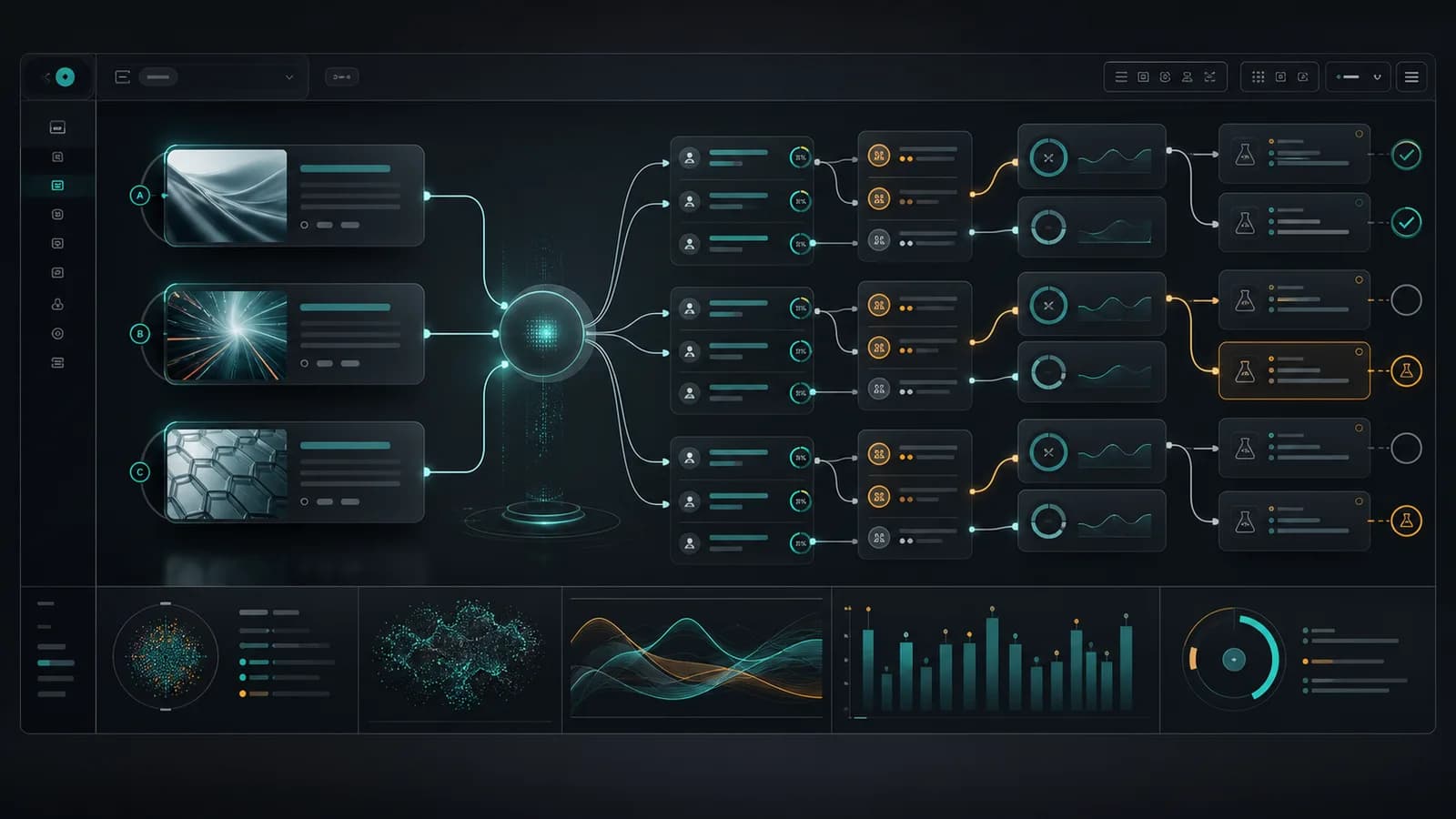
Willingness to pay asks what value or price a buyer might accept for a product. Price sensitivity asks how buyer response changes when price changes. AI simulation can help teams explore both questions, but it should not be treated as measured elasticity, demand, or customer preference without real evidence.
Core distinction
What is the difference between price sensitivity and willingness to pay?
Willingness to pay focuses on the value or price a buyer may accept; price sensitivity focuses on how demand, objections, or approval changes as price changes.
A buyer can be willing to pay for a product but still be highly sensitive to a higher tier, annual commitment, usage limit, or discount deadline. The distinction matters because each question needs different evidence.
Decision matrix
How should teams compare the two pricing questions?
Compare the decision, evidence, output, and failure mode before choosing a pricing simulation or research method.
| Dimension | Willingness to pay | Price sensitivity |
|---|---|---|
| Question | What value or price feels acceptable? | How does reaction change when price changes? |
| Best fit | New product, package, or value proof | Price increase, discount, tier, or promo change |
| Simulation output | Value logic, proof gaps, buyer objections | Reaction paths, threshold concerns, tradeoffs |
| Validation | Interviews, surveys, sales evidence | Experiments, deal review, surveys, cohort behavior |
AI use
Where can AI simulation help?
AI simulation can help identify which buyer roles, price points, value claims, discounts, and proof gaps deserve real validation.
- Compare buyer reactions to monthly, annual, usage-based, seat-based, or tiered pricing.
- Find package boundaries that create confusion or perceived unfairness.
- Rehearse discount effects on urgency, trust, brand quality, and renewal expectations.
- Turn objections into sales discovery questions and research tasks.
Risk
What mistakes should teams avoid?
Teams should avoid treating generated price ranges as demand data, mixing too many variants, ignoring budget ownership, or skipping real validation.
- Do not ask AI for a single recommended price without source evidence.
- Do not compare price, package, market, and audience changes in one run.
- Do not assume the user, buyer, finance team, and procurement will react the same way.
- Do not publish simulated buyer quotes as customer evidence.
Boundary
What can simulation not establish?
Simulation cannot establish elasticity, purchase intent, conversion lift, or representative willingness to pay without real customer or market data.
Use simulation to decide what to test. Use customer research, sales evidence, analytics, and experiments to decide what to believe.
Simulation is not a representative survey or a deterministic forecast.
MiroFish output is designed for hypothesis generation, scenario stress testing, and research preparation. Do not present generated actors, dialogue, percentages, or reaction paths as observations from real customers or a statistically representative population.
Wake-up zone
What are the key takeaways?
- WTP and price sensitivity answer different pricing questions.
- AI simulation is useful before measurement, not instead of measurement.
- Buyer roles and controlled variants determine output quality.
- High-stakes pricing decisions need real evidence.
Frequently asked questions
What should teams know before using this method?
Can AI pricing research replace real willingness-to-pay research?
No. AI pricing research can prepare the work, expose weak assumptions, and generate validation tasks, but it cannot measure real demand, purchase behavior, or willingness to pay.
What should teams upload before a pricing simulation?
Use pricing pages, plan limits, product briefs, sales notes, win-loss notes, customer interviews, support tickets, competitor pricing, renewal objections, and known constraints.
When is pricing simulation useful?
Use it before a pricing change, package redesign, discount campaign, sales enablement update, or customer research study that needs sharper questions.
How should teams use the output?
Turn the output into a validation backlog: interview questions, survey items, sales discovery prompts, experiment ideas, and pricing claims that need evidence.
Primary research to review
Pricing comparison
Choose the pricing question before choosing the method.
Use MiroFish to rehearse WTP and sensitivity assumptions before committing to a pricing study.
Compare pricing reactionsContinue the cluster
Willingness to Pay Simulation
Rehearse willingness-to-pay assumptions, price objections, proof gaps, and validation tasks before pricing research.
Discount Sensitivity Simulation
Test discount reactions, urgency claims, brand risk, procurement behavior, and renewal pressure before promotion.
Willingness to Pay Research with AI
Turn WTP assumptions into sharper interviews, surveys, experiments, and pricing validation checks.