
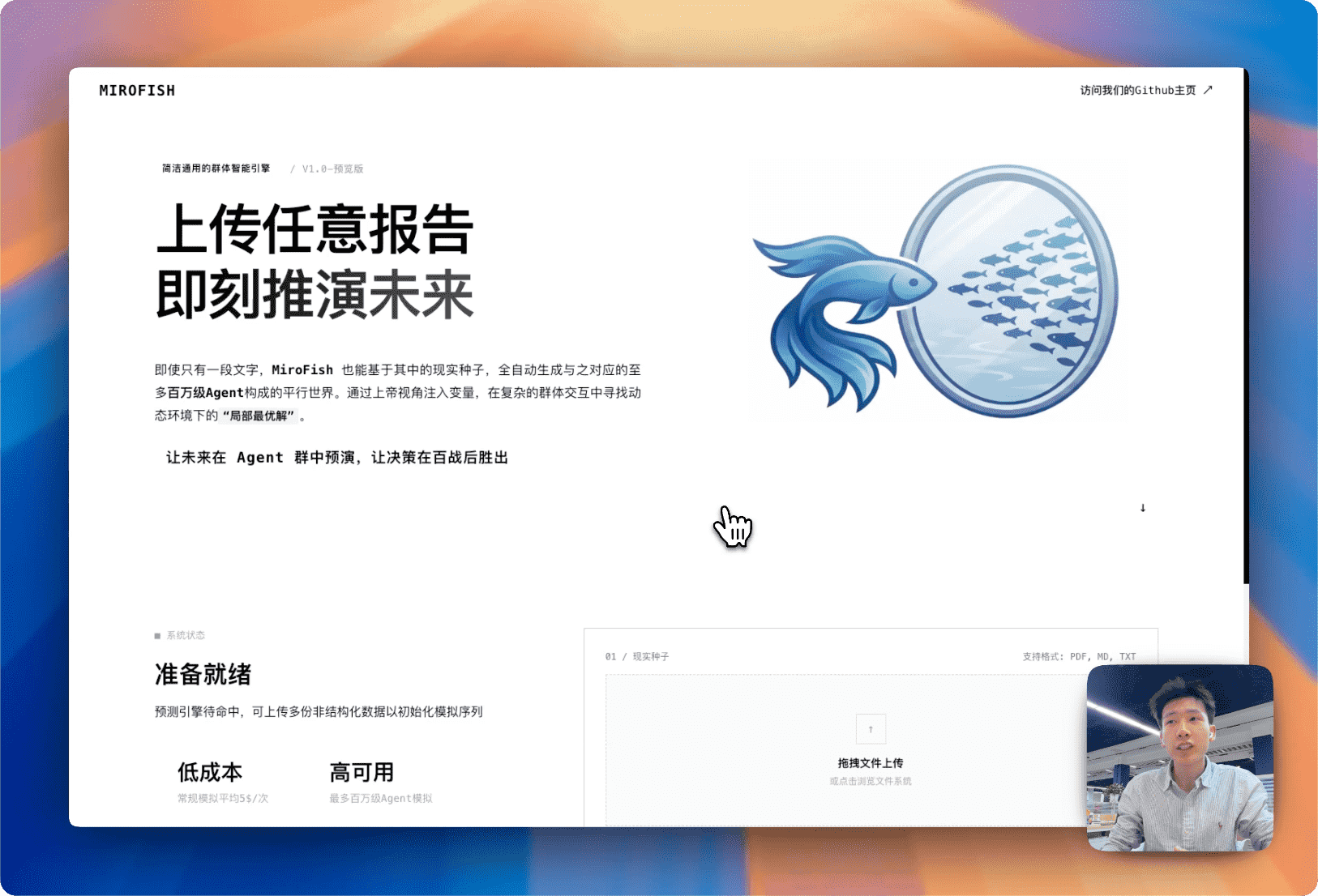
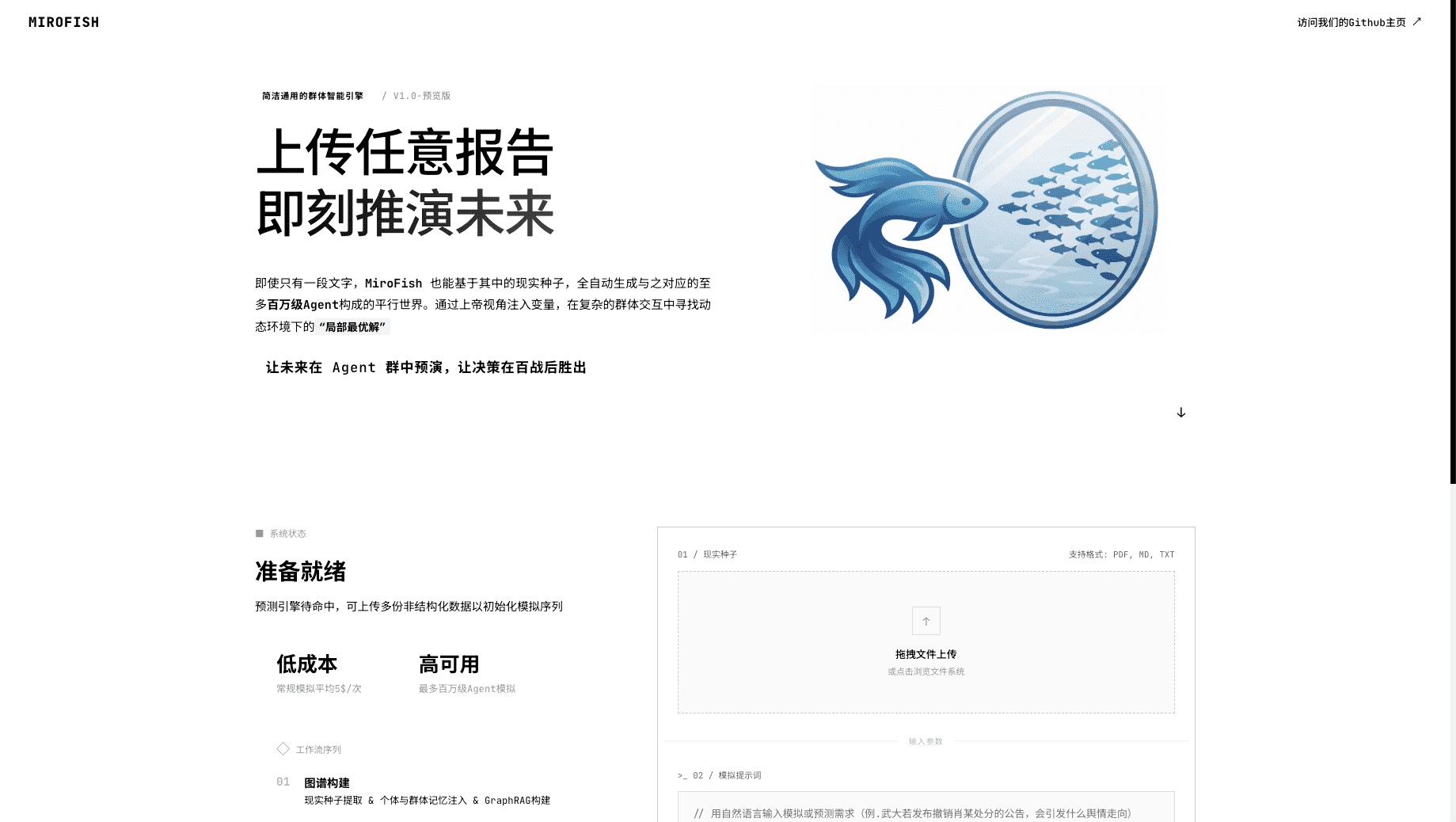
Upload Any Report. Simulate The Future Instantly.
MiroFish transforms real-world seeds such as news, policy drafts, analytical reports, or fiction into a parallel world populated by agents with memory, motives, and social behavior.
From public opinion forecasting to literary continuation, it lets you inject variables, run social evolution, and inspect the likely trajectory before the real world catches up.

Ontology Generation
Turn raw reports, notes, or fiction into structured entities, motives, and factual anchors.
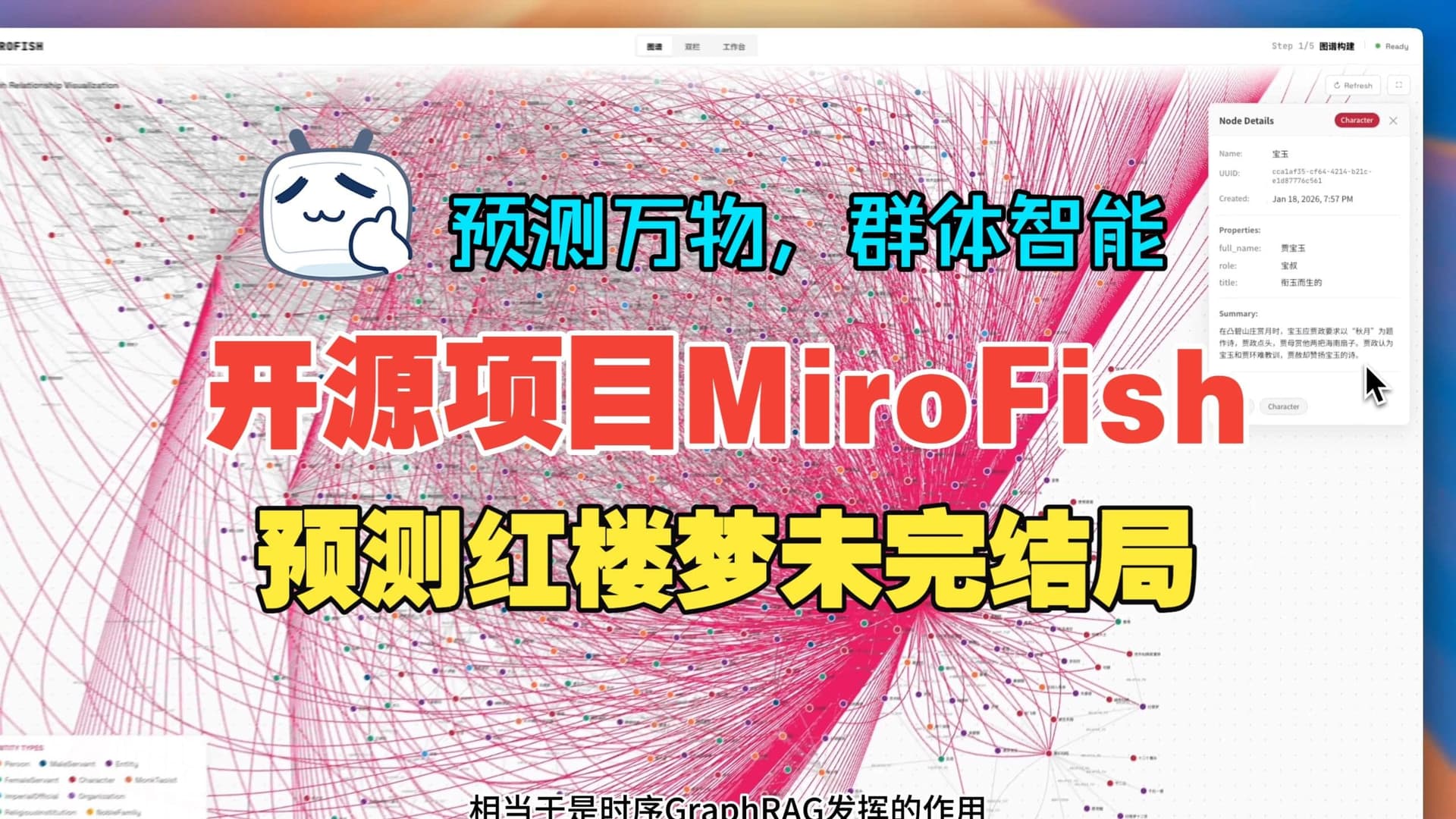
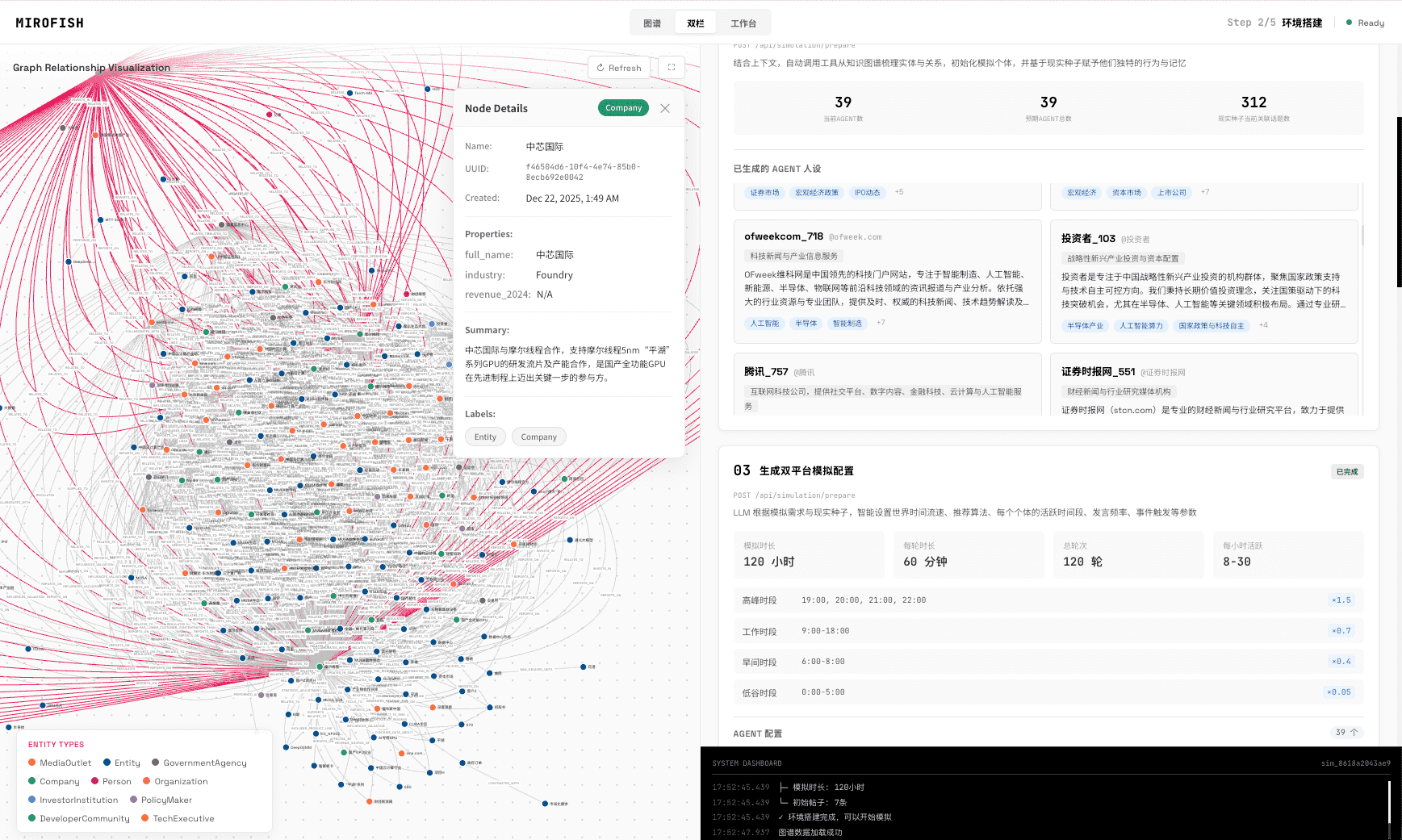
Graph Construction
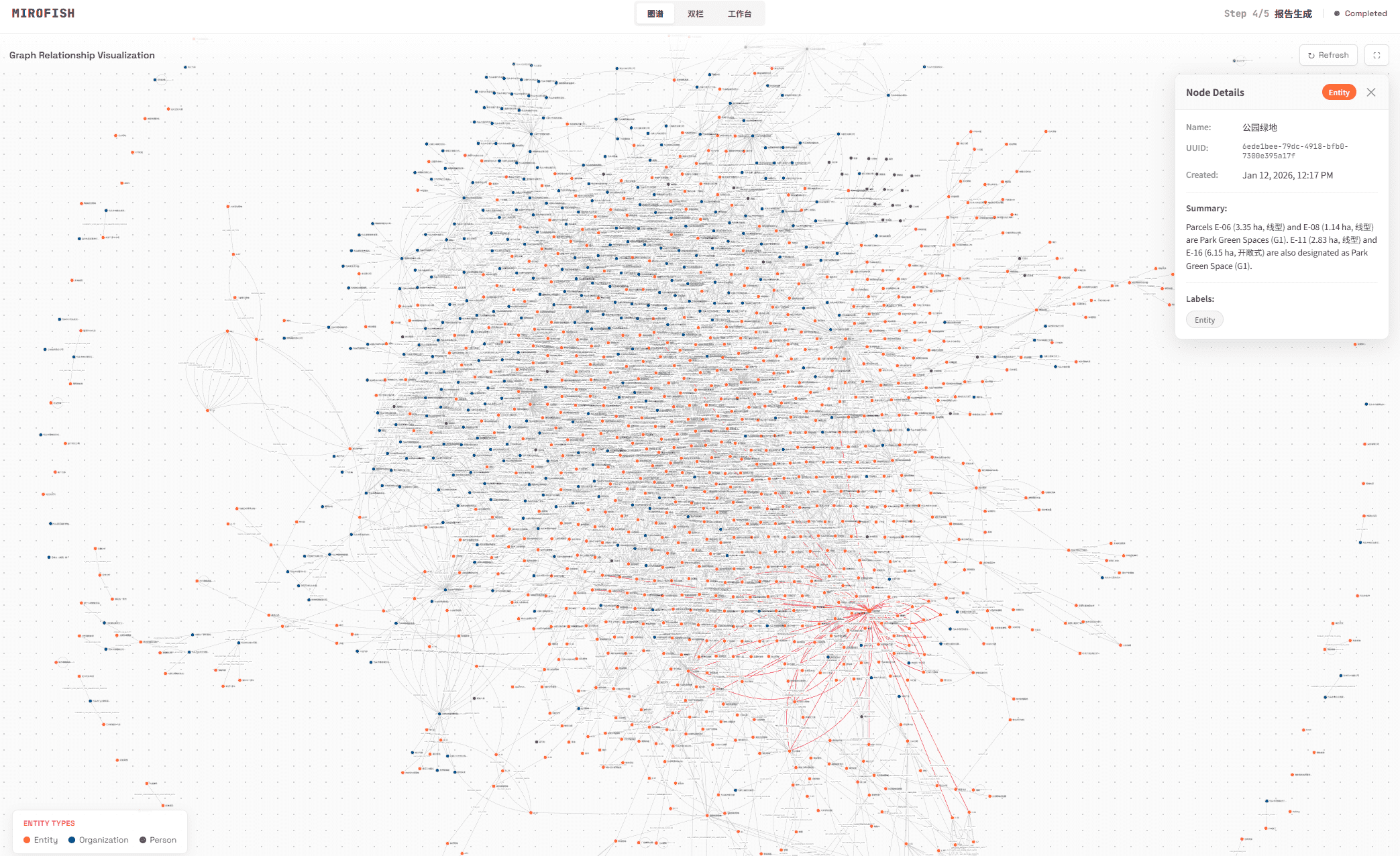
Assemble a living relationship graph that exposes the actors, tensions, and memory structure behind the scenario.
Parallel Simulation
Let platform-native agents interact across Twitter and Reddit style channels over multiple rounds.
Report Generation
Condense the trajectory into a readable prediction report with key turning points, risks, and confidence signals.
Deep Interaction
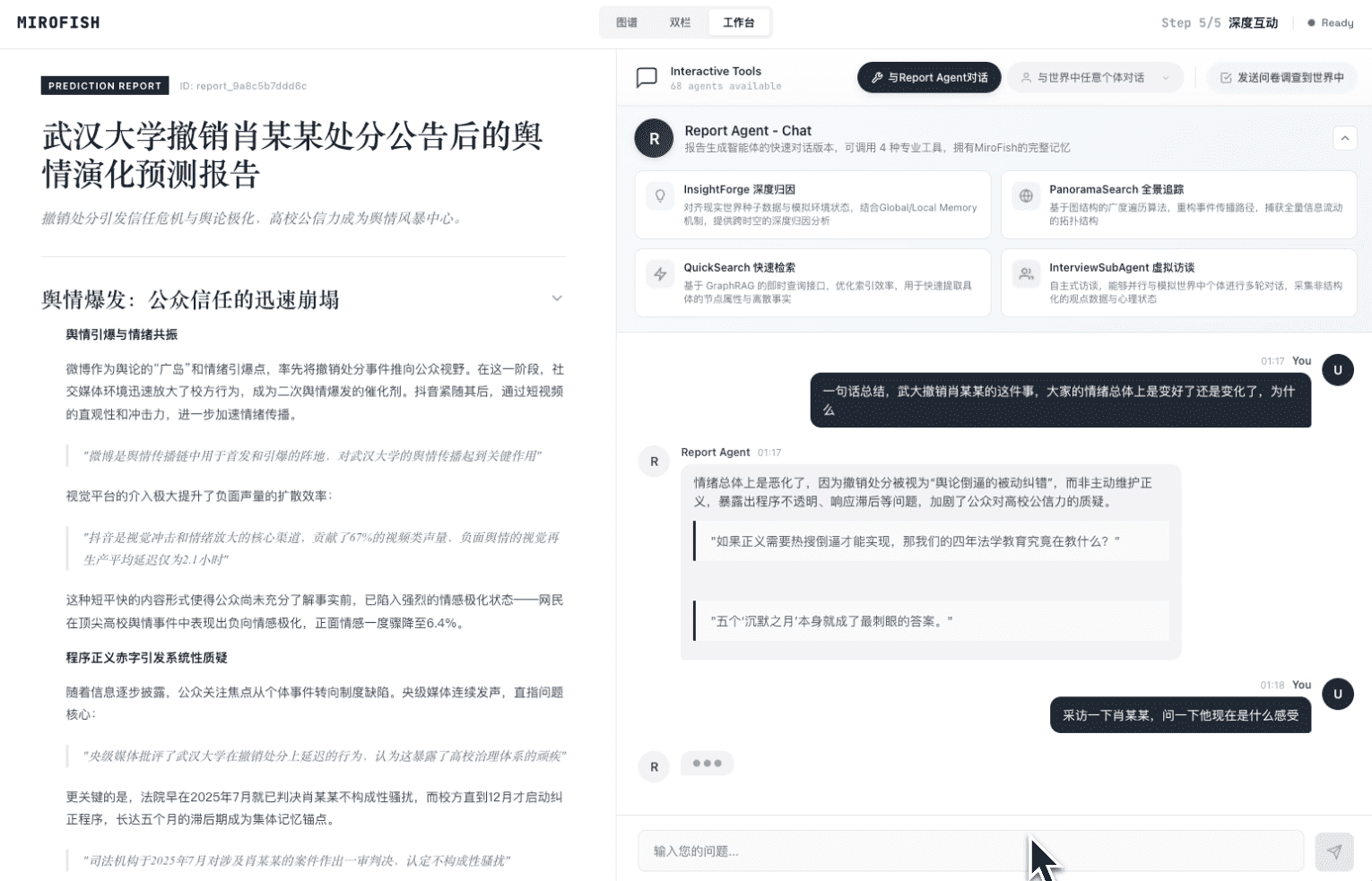
Interrogate the generated world through ReportAgent or by interviewing individual characters directly.
Engine Standing By
Upload narrative seeds, analytical reports, policy drafts, or story fragments. The graph, simulation, report, and interaction chain will be opened from one console.
Simulation history
Narrative escalation map
Model how institutions, media, influencers, and observers reshape the first narrative around an incident.
Top misunderstanding risk
Stress-test product messaging before competitors, users, and commentators interpret the launch for you.
Downstream pressure analysis
Inspect how different stakeholder groups interpret a draft policy once incentives and compliance pressure collide.
Crisis response gap
See how a fragile launch or reputational event expands when the public question drifts away from internal intent.
Sentiment divergence summary
Run a market-facing scenario where management, analysts, and retail narratives react to the same financial signal differently.
Character pressure graph
Treat a fictional world as a live graph of motives and memory, then test how one new event changes the story.
See the output surface before you upload anything
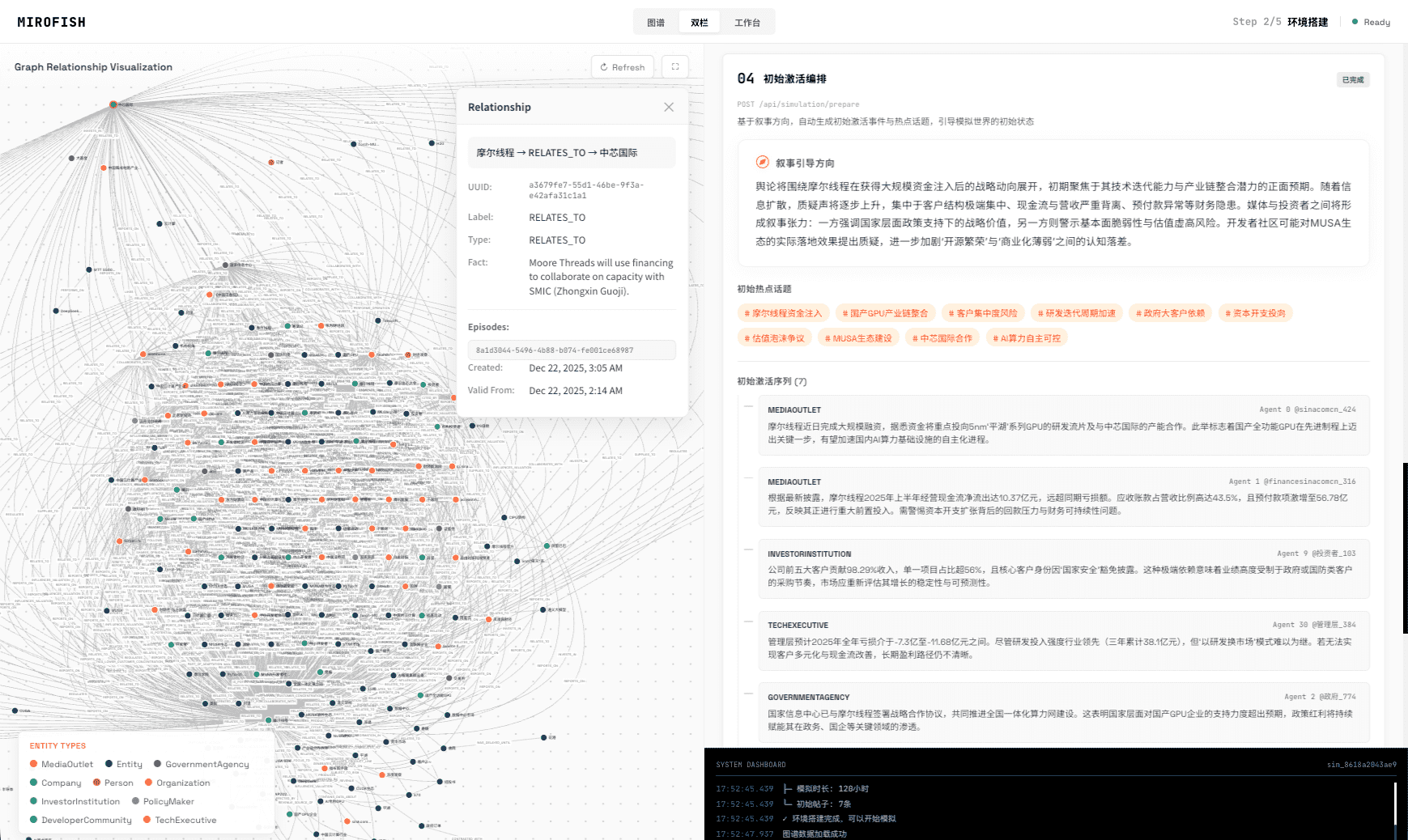
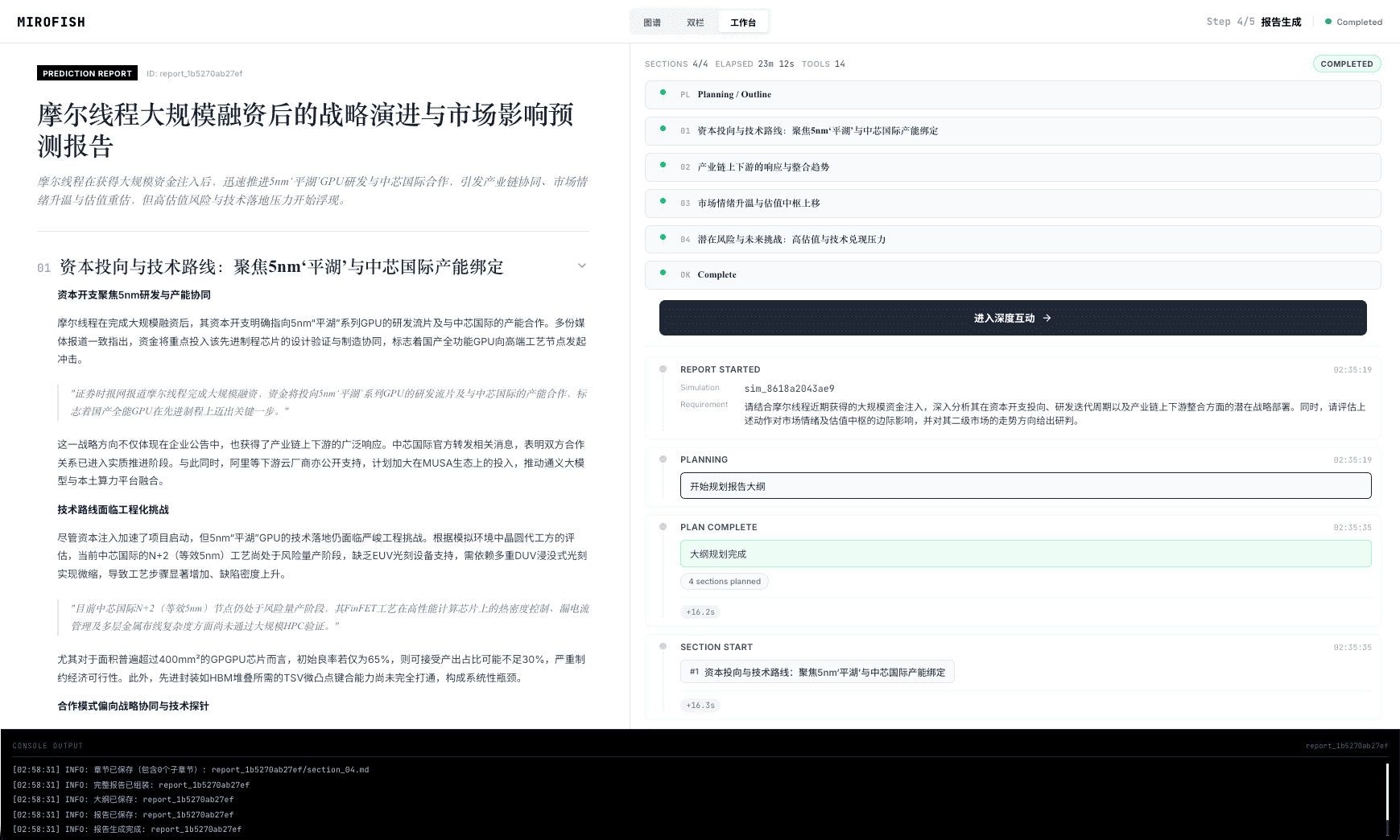
The graph, simulation, and report views reveal what MiroFish actually produces, so the first visit becomes an inspection session instead of a blank decision.
Read the likely trajectory as an executive summary.
The report compresses the path into a concise readout of risks, key actors, and the evidence line behind the forecast.
Public Opinion Forecast
Best for incidents, controversies, and reputation-sensitive policy events.
Launch Stress Test
Best for product launches, open betas, and brand announcements.
Policy Reaction
Best for regulation, governance changes, and public institution messaging.
Narrative Continuation
Best for fiction, scenario writing, and character-driven world simulation.
How to Use MiroFish: AI Simulation Guide
Learn how to use MiroFish to upload source material, frame an AI simulation, review the graph, run agents, and read the forecast report.
What Is MiroFish? AI Simulation Workspace
Learn what MiroFish is: an AI simulation workspace that turns source material into a graph, multi-agent simulation, and forecast report.
How MiroFish Simulates the Future
See how MiroFish turns source material into a scenario graph, multi-agent simulation workflow, and reviewable AI forecast report.
What Is Multi-Agent Simulation?
Learn what multi-agent simulation is, when it helps, and how MiroFish uses actor graphs, reaction rounds, and forecast review.
How to Review a MiroFish Forecast
Use this MiroFish forecast review checklist to validate scenario framing, graph quality, assumptions, confidence, and rerun prompts.
Stay longer where the judgment still matters
What MiroFish Simulates
What Stays Human
Research Context
Questions before you simulate
What can I upload into MiroFish?
The current product shell accepts PDF, Markdown, and plain text. The workflow assumes the file contains enough narrative, analytical, or factual seed material to build a graph and simulation context.
Does this really simulate multiple platforms?
The product flow is designed around a dual-surface simulation. In fixture mode the posts and actions are deterministic; in backend mode the Python service is responsible for generating platform-native behavior.
Can I use it for public opinion and fiction?
Yes. The built-in scenarios cover public opinion events, literary continuation, market or finance cases, and a general-purpose predictive mode.
What does the report include?
Each report includes an executive summary, predicted developments, major risks, evidence lines, key actors, and a long-form narrative explanation of how the outcome unfolds.