
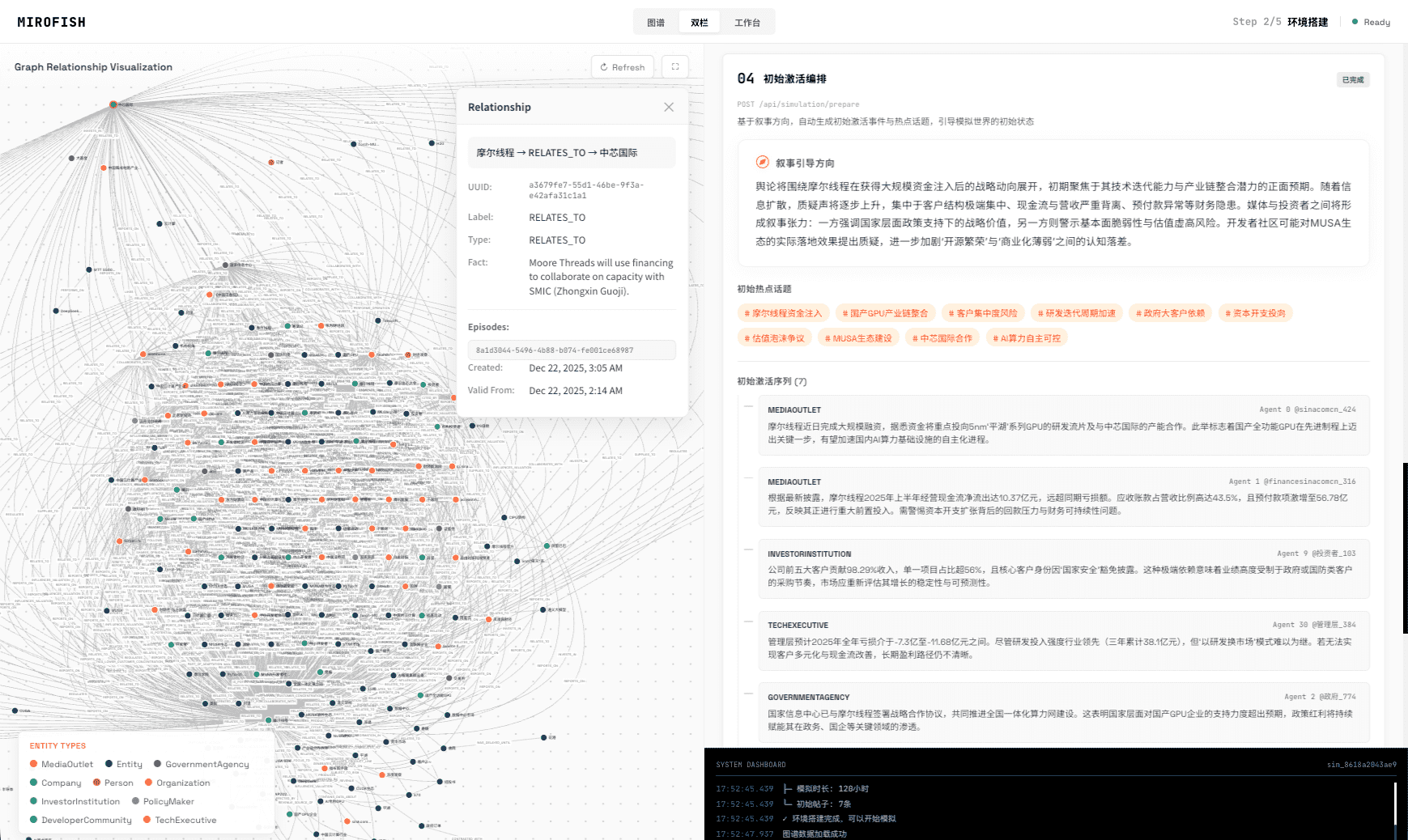
A customer journey map generator creates a journey diagram or template. A customer journey research tool helps teams understand whether the map is grounded in evidence. MiroFish supports the research side: teams upload source material, review stages, touchpoints, pain points, reports, and follow-up questions. It does not replace design tools or real journey analytics.
Difference
What is the difference between a journey map generator and a research tool?
A generator makes the artifact faster; a research tool helps decide whether the artifact is true enough to act on.
The visual map matters, but the risky part is usually evidence quality. Teams need to know which stage definitions, touchpoint assumptions, pain points, and customer motivations came from real sources versus internal guesses.
Comparison
How should teams compare customer journey tools?
Compare tools by output, evidence handling, validation support, analytics integration, and whether the team needs a diagram or a decision workflow.
| Dimension | Map generator | MiroFish research workflow |
|---|---|---|
| Main output | Journey map, template, or diagram | Journey stages, touchpoints, pain points, report, validation questions |
| Input | Persona prompt or workshop notes | Interviews, tickets, CRM notes, reviews, analytics summaries, hypotheses |
| Best use | Presentation, workshop, visual alignment | Evidence synthesis, assumption review, research planning |
| Main risk | Clean map with weak evidence | Detailed report mistaken for measured behavior |
| Validation | Usually outside the generator | Built into the output as next research questions |
MiroFish fit
Where does MiroFish fit in the customer journey workflow?
MiroFish fits before the final map is designed, when the team needs to organize evidence and decide what customer claims still need validation.
- Use MiroFish to synthesize interviews, support tickets, reviews, CRM notes, analytics summaries, and journey hypotheses.
- Use a diagramming or whiteboard tool when the team needs a polished journey map artifact.
- Use analytics, session replay, CRM, and research tools when the team needs observed behavior or measurement.
- Use MiroFish follow-up questions to identify what the final map should not claim yet.
Limits
What should a generated customer journey map not do?
It should not present generated pain points, conversion blockers, churn causes, or satisfaction drivers as real customer evidence.
The safest workflow is to label generated findings as hypotheses and attach each important claim to interviews, analytics, CRM records, support tickets, surveys, or experiments.
Simulation is not a representative survey or a deterministic forecast.
MiroFish output is designed for hypothesis generation, scenario stress testing, and research preparation. Do not present generated actors, dialogue, percentages, or reaction paths as observations from real customers or a statistically representative population.
Wake-up zone
What are the key takeaways?
- Journey map generators are useful for artifacts.
- Research tools are useful for evidence and validation.
- MiroFish should sit before the polished map, not replace the map canvas.
- Generated journey claims need real customer evidence before decisions.
Frequently asked questions
What should teams know before using this method?
Is MiroFish a customer journey mapping tool?
MiroFish supports the research and validation layer behind customer journey mapping. It can organize source material into stages, touchpoints, pain points, reports, and validation questions, but it is not a drag-and-drop diagramming tool.
What should teams upload for customer journey mapping?
Upload interviews, survey answers, support tickets, reviews, CRM notes, website behavior summaries, sales calls, onboarding notes, churn reasons, and the journey hypothesis to review.
Can MiroFish replace journey analytics?
No. MiroFish can synthesize uploaded evidence and plan validation, but real journey analytics still requires current behavioral data, instrumentation, dashboards, and human interpretation.
What does the report help decide?
The report should identify likely friction points, weak assumptions, missing evidence, touchpoints to investigate, and questions for interviews, analytics, CRM review, or experiments.
Primary research to review
Journey research
Check the evidence before polishing the journey map.
Use MiroFish to inspect touchpoints, pain points, report claims, and validation gaps.
Analyze journey evidenceContinue the cluster
Customer Journey Mapping Tool
Use MiroFish to turn source material into journey stages, touchpoints, pain points, reports, and validation questions.
Customer Journey Mapping with AI
Follow a practical workflow for using AI to prepare a customer journey map from real source material.
Customer Touchpoint Analysis Guide
Learn how to analyze customer touchpoints using interviews, tickets, CRM notes, analytics, reports, and validation tasks.