
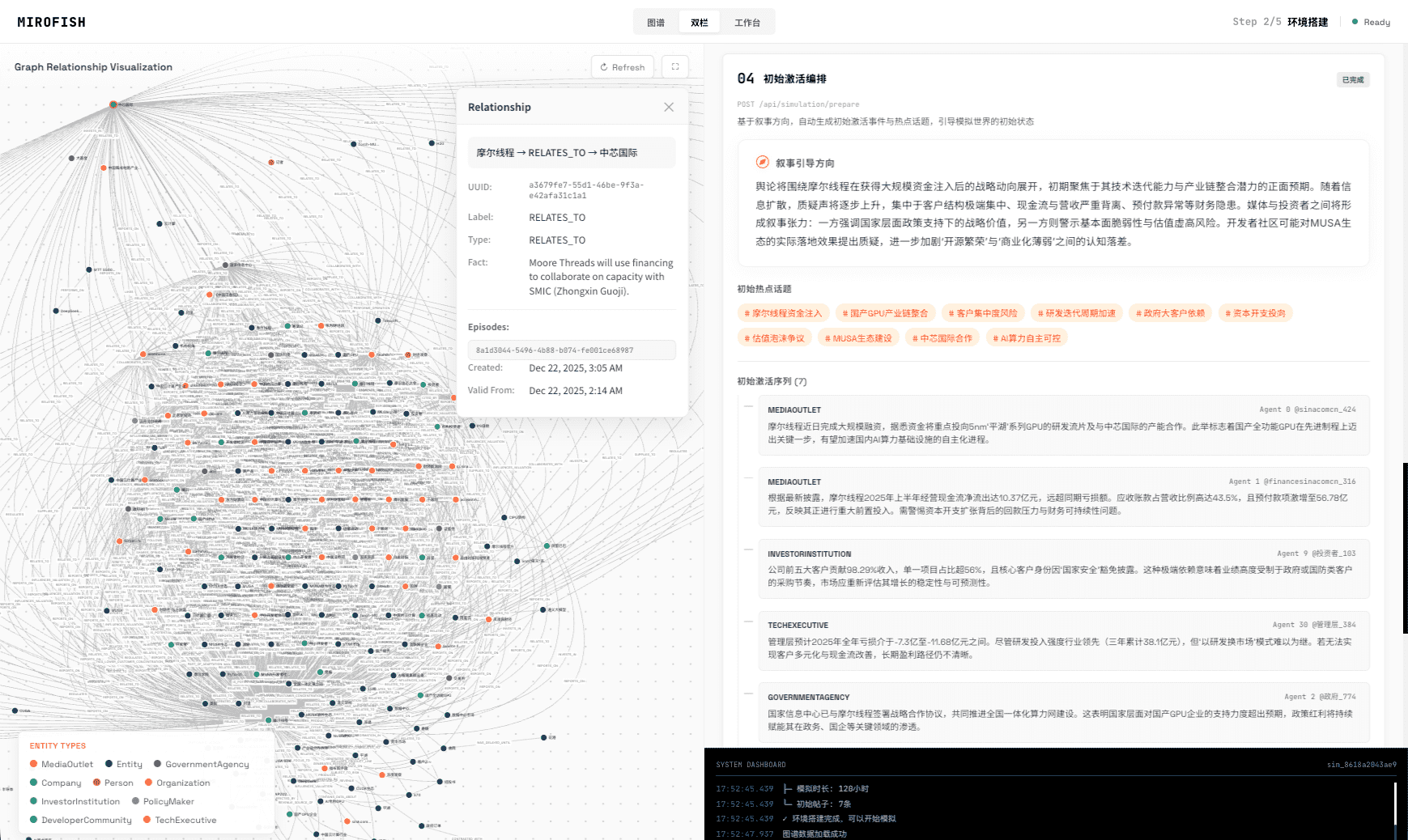
Choose an AI-moderated focus group when you need real participants and faster qualitative analysis. Choose synthetic participants for rapid question rehearsal. Choose multi-agent audience simulation when the decision depends on groups reacting to one another over time. None of these methods creates representative market evidence without an appropriate human sample.
Category clarity
What does “AI focus group” actually mean?
The phrase commonly refers to three different research designs, and the participant source is the distinction that matters most.
| Method | Who responds | Best use |
|---|---|---|
| AI-moderated focus group | Recruited people | Qualitative human feedback with automated moderation or synthesis |
| Synthetic participant panel | LLM-generated personas | Fast question rehearsal and hypothesis generation |
| Multi-agent audience simulation | AI actors connected in a scenario | Interaction, narrative spread, objections, and second-order effects |
Human qualitative research
When should you choose an AI-moderated focus group with real people?
Choose real participants when their words, experiences, misunderstandings, and group discussion are the evidence you need.
- Discover language customers naturally use rather than language generated from a persona prompt.
- Observe confusion, emotion, disagreement, and follow-up explanations in a live discussion.
- Research sensitive, local, cultural, accessibility, or lived-experience questions.
- Create qualitative evidence that stakeholders can trace to recruited participants.
Fast rehearsal
When are synthetic participants useful?
Synthetic participants are useful when you need inexpensive iteration before recruiting people, not when you need to claim what a market segment actually thinks.
- Test whether discussion questions are specific enough to produce useful answers.
- Generate possible objections and follow-up probes for a moderator guide.
- Compare how different persona assumptions change the output.
- Identify unsupported claims that should be prioritized in human research.
Interaction
When should you use synthetic audience simulation instead?
Use simulation when the outcome depends on interaction: one actor's reaction changes what another actor sees, believes, blocks, or amplifies.
A focus group is a research session. A scenario simulation is a decision rehearsal. For a product launch, the relevant system can include early adopters, skeptical buyers, competitors, commentators, procurement teams, and executives responding across multiple rounds.
The useful output is not a vote from invented people. It is a map of plausible pressure points, conflicting incentives, missing proof, and questions to test before launch.
Selection rule
How do you choose the right method for a product decision?
Start with the evidence the final decision requires, then choose the fastest method that can legitimately produce that evidence.
- 1
Need human language or experience?
Recruit real participants; AI can assist moderation and synthesis.
- 2
Need to improve the research plan?
Use synthetic participants to rehearse questions and expand hypotheses.
- 3
Need to model interaction over time?
Use multi-agent simulation to inspect reaction paths and second-order effects.
- 4
Need representative measurement?
Run a properly sampled human survey or behavioral experiment.
Simulation is not a representative survey or a deterministic forecast.
MiroFish output is designed for hypothesis generation, scenario stress testing, and research preparation. Do not present generated actors, dialogue, percentages, or reaction paths as observations from real customers or a statistically representative population.
Wake-up zone
What are the key takeaways?
- Ask who the participants are before comparing AI focus group products.
- AI moderation with real people and synthetic participation solve different problems.
- Multi-agent simulation is designed for interaction, not population measurement.
- Select the method from the evidence required—not from speed alone.
Frequently asked questions
What should teams know before using this method?
Is an AI focus group made of real people?
Sometimes. Some services use AI to moderate or analyze sessions with recruited people; others generate the participants themselves. Confirm the participant source before interpreting the results.
Is a synthetic audience the same as a focus group?
No. A synthetic audience is generated by models and may be used for scenario rehearsal. A conventional focus group collects qualitative evidence from recruited people in a moderated discussion.
Can MiroFish replace a focus group?
No. MiroFish can pressure-test a scenario before research and help teams design better questions, but it does not turn generated actors into real customers.
Which method is fastest?
Synthetic participants and simulations are usually fastest because they avoid recruitment. Speed does not make their output representative or suitable for every decision.
Primary research to review
Choose the evidence first
Rehearse the scenario, then validate the claims that matter.
Use MiroFish to expose assumptions and interaction risks before you recruit customers, field a survey, or commit launch budget.
Explore the AI focus group alternativeContinue the cluster